
Stop Guessing, Start Coding: Use CS Algorithms to Hack Your Home Decluttering
Your spare room isn't a "guest suite." It's a buffer overflow error in physical form. You're staring at a mountain of stuff, decision fatigue is setting in, and your brain is currently running at 100% CPU usage just trying to decide if you need that third half-broken whisk.
Stop treating decluttering like an emotional journey and start treating it like a resource management problem. In computer science, we use algorithms to manage memory and cache because space is finite. Your house is just a low-latency cache for your life.
It's time to optimize. Here is how to apply Big O efficiency to your mess.
Start Here: The Fastest Algorithm is "Put It Away Now"
Before you optimize where things go, optimize that they get put away at all. The quickest way to clean your space isn't finding the perfect home for every item — it's stashing everything away right now into one place. Not the right place. Not the organized place. Just a place.
This is the decluttering equivalent of write-first, index-later database design. You're batching writes (putting stuff away) and deferring reads (finding it again) until you actually need it.
The hack: Grab a box. Throw the clutter in. Slap a QR code on it.
For $20, you can buy a thermal label printer. Print a QR code, stick it on the box, and let StashDog handle the "pointer" to what's inside. You've just turned your junk pile into a queryable database — no manual filing required. When you need something later, you search StashDog, not your entire house.
Efficiency: O(1) to stash. O(1) to retrieve. Zero emotional overhead.
The Problem: Decision Fatigue (O(n²))
Most people declutter by looking at every single item and asking, "Does this spark joy?" If you have 1,000 items, that's 1,000 emotional crises. That's inefficient. To get to the "joy" part, we first need to clear the junk using high-efficiency algorithms.
1. FIFO (First In, First Out)
Best for: Closets, pantries, and the "office supplies" drawer. In a queue, the oldest data gets processed first. Apply this to your closet: sort by acquisition date. If you haven't touched that neon windbreaker since 2014, it's the first to be evicted.
- Efficiency: O(1) per eviction. You don't think; you just remove the oldest record.
- Benefit: Keeps your "inventory" fresh and prevents the accumulation of "legacy" items.
2. LRU (Least Recently Used)
Best for: Storage bins, desks, and kitchen gadgets. This is the gold standard of cache replacement. You keep a "Stack" of items. Every time you use something, it goes to the top. The stuff at the bottom? That's your Least Recently Used.
- The Hack: Put all your kitchen utensils in a box. As you use one, put it back in the drawer. After 30 days, anything still in the box is "dead code." Source: Mentorist
- Efficiency: O(1) average. It tracks usage frequency without you needing to do a full system scan.
3. Random Eviction
Best for: Junk drawers and low-value "miscellaneous" piles. Sometimes, the cost of the decision is higher than the value of the item. If you have a drawer full of 50 mystery cables and old pens, don't analyze them. Reach in, grab five, and chuck them.
- Efficiency: O(1). Zero cognitive load.
- The StashDog Tip: If you're nervous, snap a quick photo of the "evicted" pile in StashDog before you toss it. If you haven't looked at the photo in 6 months, delete the photo too. [Source: StashDog Knowledge Base]
4. Category Grouping (The Sort Algorithm)
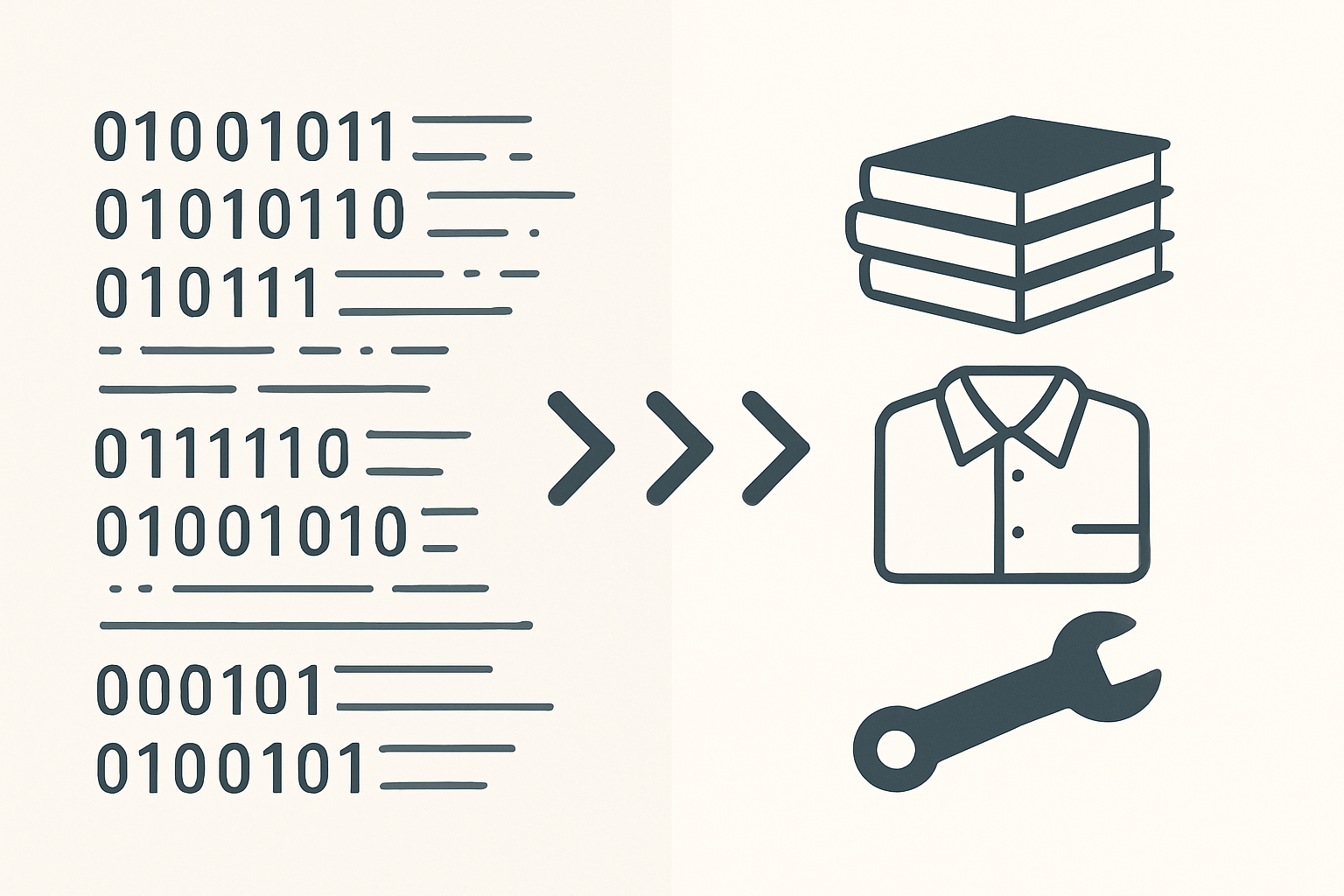
Best for: Books, clothes, and tools. Don't declutter room-by-room. That's like trying to sort a database one row at a time. It's slow and results in duplicates. Use Category Grouping: gather every single book in the house into one pile.
- Efficiency: Effectively O(n). You spot duplicates instantly and process the entire "dataset" in one pass. Source: Organized Nest
The Step-By-Step Optimized Process (The CALM Method)
Augmented with algorithms for minimal passes:
- Clear Out (O(n)): Empty the space completely. You can't optimize a disk while it's still spinning. Source: Contempo Space
- Assess + Apply Algorithm: Don't ask "do I love this?" Ask "What is the LRU status?" Group items by frequency.
- Set Limits (O(1)): Assign one bin per category. If the bin is full, it's at capacity. To add something new, you must evict an existing item (FIFO).
- Prioritize Zones (Greedy Algorithm): Tackle the kitchen or entryway first. These are "High Traffic" zones that offer the maximum immediate gain for your effort.
- Label + Maintain (O(1) per item): Use StashDog to inventory what remains. Once it's in the app, you don't have to "search" your house (O(n)); you just query the database (O(1)).
Summary Table: Decluttering Logic
| Algorithm | Use Case | Benefit |
|---|---|---|
| FIFO | Closets | Prevents "legacy" clutter |
| LRU | Tools/Desks | Keeps essentials accessible |
| Random | Junk Piles | Ends "analysis paralysis" |
| Greedy | Kitchen/Entry | Max ROI on your time |
Stop Manually Searching Your Life
Why run a full system scan every time you need the holiday lights? Use StashDog to index your physical world. Snap a photo, tag the location, and let our AI handle the "pointer" to where your stuff is hidden.
Your house has limited storage. Optimize the cache, evict the junk, and live with O(1) stress.
References:
- Algorithm strategies for home management: Mentorist
- Psychology of organization and clearing space: Contempo Space
- Effective grouping and decluttering flows: Organized Nest
- Inventory and tracking best practices: Everspruce