From Obsession to Organization: Why Collectors Need a Database Like StashDog
Hey, fellow stashers and treasure hunters—whether you're knee-deep in rare coins that could fund a small nation, first-edition books whispering secrets from dusty shelves, vintage watches ticking like time bombs of nostalgia, or trading cards that make your inner kid do cartwheels—collecting isn't just a hobby. It's a full-blown love affair with objects. But let's be real: that intense relationship can turn chaotic faster than a Black Friday stampede if you don't get a grip on the info side of things. Enter databases, or more specifically, StashDog—the secret sauce that turns your obsessive accumulation into a sleek, searchable empire of knowledge.
The Problem: Your Collection's Invisible Chaos
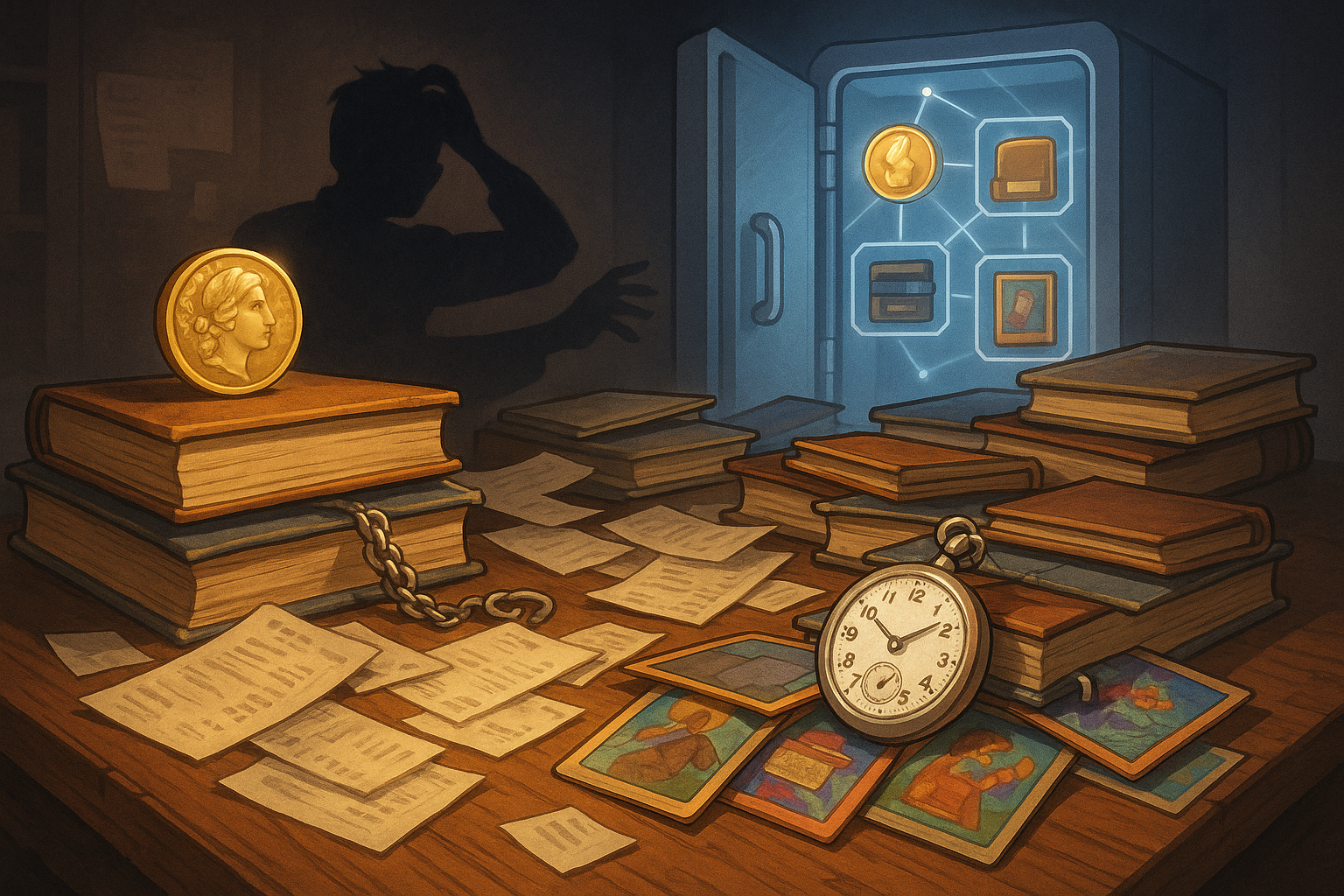
Picture this: You start simple. A notebook scribbled with acquisition dates, a shoebox of receipts, maybe a spreadsheet that's seen better days. Sounds quaint, right? Wrong. As your collection swells—hello, hundreds of items— that 'simple' system morphs into a monster. Provenance gets buried under pizza boxes (metaphorically), condition notes fade into oblivion, market values? Forget about it. Suddenly, you're not curating a collection; you're wrestling a tangled web of forgotten details.
The fallout? Key info vanishes like socks in a dryer. Cataloging lags behind your latest eBay binge. You miss out on that perfect piece to complete your set because, oops, you can't remember what you're missing. And don't get us started on proving authenticity—without solid records, your treasures could be devalued faster than a fad diet. It's the ultimate buzzkill: Your passion project's roadblock is... your own brain (and those scattered notes).
Why StashDog is the Collector's Antidote
Databases aren't just for nerdy IT folks or massive corporations—they're your collection's best friend. And StashDog? It's like that friend who shows up with coffee, a plan, and zero judgment for your hoarding tendencies. Built for personal inventory management, StashDog transforms the chaos into clarity, whether you're tracking vintage watches or a Pokémon card empire.
1. Centralization and Control: Your Digital Vault
Ditch the fragmented mess. StashDog acts as a central hub for every juicy detail: high-res images, acquisition stories, condition reports, even those quirky personal notes like 'Bought this during that wild comic con bender.' It's like having a digital library where everything's findable in seconds. Businesses rave about data catalogs for the same reason—they make accessing and managing info a breeze (shoutout to FirstEigen's take on data catalog benefits). Why should your collection suffer in the stone age?
2. Retrieval and Rapid Decision-Making: Hunt Smarter, Not Harder
Ever hesitated on a buy because you couldn't recall if you already had a duplicate? Or needed to appraise insurance values pronto? StashDog's search and query powers let you pull up 'missing coins from 19th-century series' or 'watches needing polish' faster than you can say 'deal.' This isn't just convenient—it's a game-changer for decisions on buying, selling, or upgrading, giving you that competitive edge collectors dream of. Echoing biz wisdom, structured data means faster, sharper moves.
3. Preservation of Knowledge and Value: Pass the Torch (Without the Drama)
Collections aren't solitary forever. They get handed down, loaned out, or shown off. StashDog ensures your hard-earned knowledge—every restoration tale, market fluctuation note—is locked in, transferable, and future-proof. No more 'mystery objects' haunting your heirs. It's preservation on steroids, keeping your passion alive across generations.
4. Auditability and Provenance: Prove It or Lose It
In today's market, backstory is king. A solid chain of custody can skyrocket value. StashDog tracks transactions, exhibitions, and fixes with timestamped precision, mirroring pro museum practices. Authenticity? Proven. Devaluation? Averted. Check out OCLC's insights on accessible special collections for why this matters.
5. Community and Sharing: From Solo Quest to Squad Goals
Collecting thrives in communities—swapping tips, verifying fakes, geeking out over shared obsessions. StashDog makes sharing lists, snaps, and docs a snap, fostering that collective vibe. Research shows serious collectors are info-sharing pros, and tools like this turn private hoards into communal treasures (Lee & Trace's studies on collector info behaviors, another deep dive here).
The Psychology: Why Your Brain Demands This
Collecting scratches that itch for object lust and info mastery. But without structure, it leads to decision fatigue, lost connections, and joy-sucking uncertainty. Habitual catalogers? They're the happy ones, turning solo passions into enduring legacies. StashDog feeds both your object needs and info cravings, keeping the fun alive.
Building Your StashDog-Powered Database
No need for a PhD in tech. StashDog's mobile app (iOS & Android) starts simple: Scan items, add details, snap pics. It scales from basic spreadsheets vibes to pro features like filtering loans, generating reports, and tracking completeness. Backups? Automatic. Updates? Effortless. Essentials covered: Unique records per item, full metadata, searchable everything.
Embrace the Structure, Elevate the Obsession
Proud of your collector cred? Good—now level up with info architecture. StashDog doesn't just organize; it amplifies your passion, turning fragile hoards into valuable, shareable archives. Because the best collections aren't just piles of stuff—they're museums of meticulously curated info. Download StashDog today and say goodbye to chaos, hello to mastery.
References:
- Data catalog benefits: FirstEigen
- Collector communities: Lee-Trace 2009, CBT JASIST 2009
- Unsustainable practices: Buffalo State Thesis
- Museum info structuring: OCLC Research