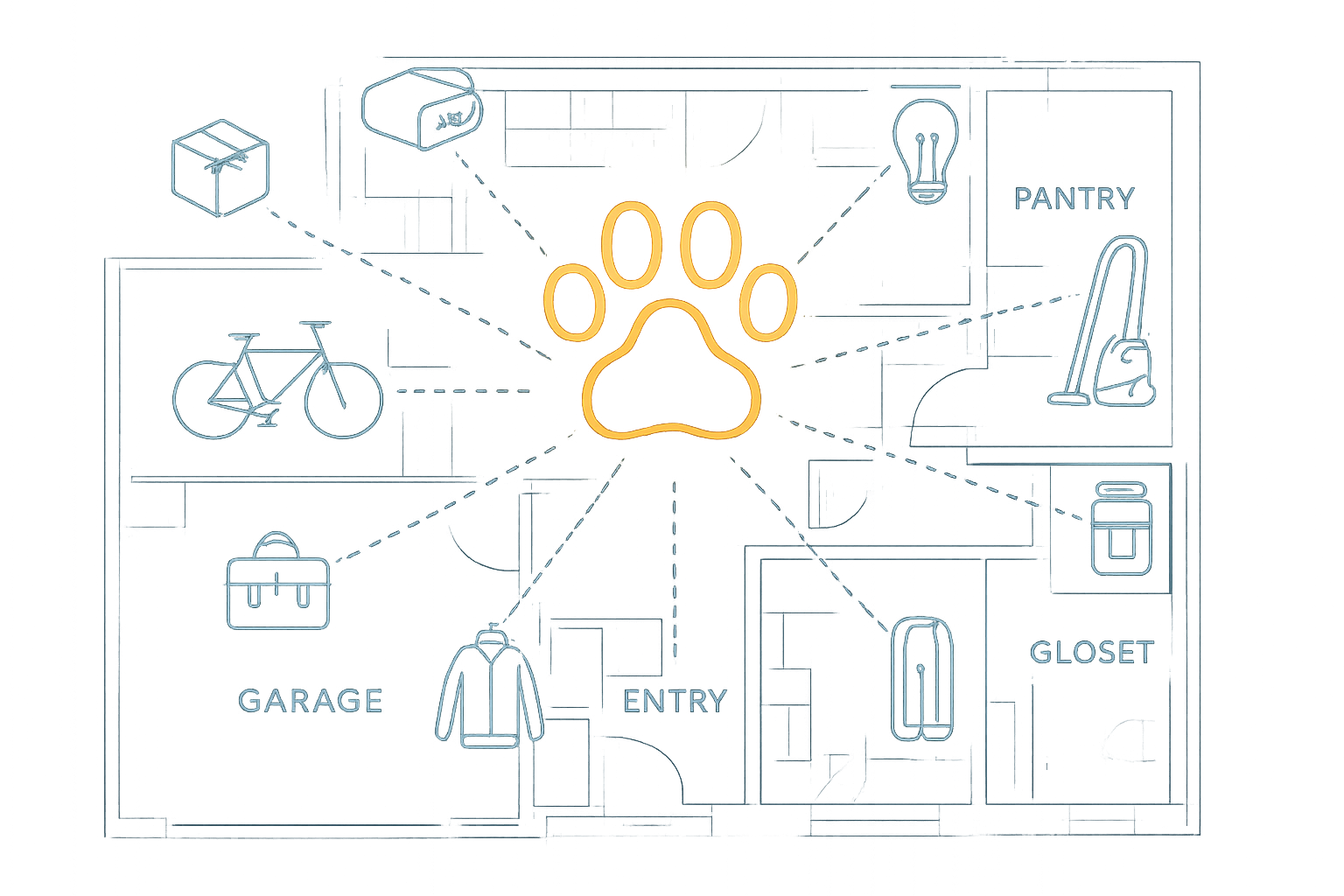
Stop Playing Hide-and-Seek With Your Own Stuff
Somewhere in your garage, one specific blue bin is holding your holiday decorations hostage. It might be behind the camping gear. It might be under the “maybe-one-day” pile. Either way, finding it should not require forty minutes and a personal reckoning.
Domestic chaos isn’t just about having "too much stuff." It’s a metadata problem. You have the items; you just don’t have the data on where they are.
At StashDog, we think that’s bullshit. You shouldn’t need a private investigator to find your passport or that one specific HDMI cable.
The "I'll Remember Where I Put This" Lie
We’ve all said it. "I’ll put this spare key in the third drawer of the kitchen island. I definitely won't forget." Fast forward six months, and you’re tearing the house apart while the locksmith charges you by the minute.
According to some very stressed-out researchers, the average person spends about 2.5 days a year looking for lost items. That’s 60 hours of your life you could have spent doing literally anything else—like re-watching The Bear or staring blankly at a wall.
Enter StashDog: Your Brain, But Better
StashDog is the digital leash for your physical world. It’s an inventory management system designed for people who are tired of the "box shuffle." Here is how we help you get your shit together:
- AI-Powered Tagging: Stop typing. Use our smart tagging to categorize items instantly.
- Visual Mapping: If a picture is worth a thousand words, a photo of the inside of a moving box is worth roughly ten thousand headaches.
- QR Code Magic: Stick a code on a bin, scan it, and see exactly what’s inside without breaking a sweat (or a fingernail).
- Family Sharing: Finally, a way to answer "Honey, where is the...?" without actually looking up from your phone.
How to Start Your De-Clutter Journey (Without the Meltdown)
Step 1: The "Low Hanging Fruit" Sweep Pick one area. Just one. The "junk drawer" or that one shelf in the pantry. Take photos, log them into StashDog, and give them tags that actually make sense to you.
Step 2: The Bin & Tag Method Got stuff in storage? Toss it in a bin, slap a StashDog-compatible QR label on it, and scan. You’ve just turned an opaque plastic box into a searchable digital archive.
Step 3: Breathe The next time you need that specific winter coat or the spare lightbulbs, you won't be rummaging. You'll be clicking.
Stop losing your mind over lost things. Download StashDog and turn your domestic chaos into a searchable system today.
Research Note: Americans spend an average of 2.5 days per year looking for lost items, costing the nation $2.7 billion annually in replacement costs. Sources: PR Newswire/Tile Report.